
Picking a yoga teacher training is harder than picking a yoga class. The stakes are higher, the cost is higher, and the decision shapes how you teach for the next 10 years or more.
After 21 years of hosting visiting teachers and their training groups, we found one truth keeps repeating: the container matters as much as the curriculum.
We ran our first visiting teacher training over 20 years ago. We ran another the next year, and the year after that. The patterns we noticed across that time are what this guide is built on.
Where you train, who you sit alongside, and what the surrounding hours feel like, all of it shapes whether the teachings actually land.
Here is what we found is worth asking before you book.
The curriculum is only half the decision
Most yoga teacher trainings advertise the same syllabus on paper: anatomy, philosophy, asana, pranayama, methodology, practicum.
The 200 hours and 300 hours of teaching are also standardised under Yoga Alliance certification. So what actually separates a good training from a forgettable one?
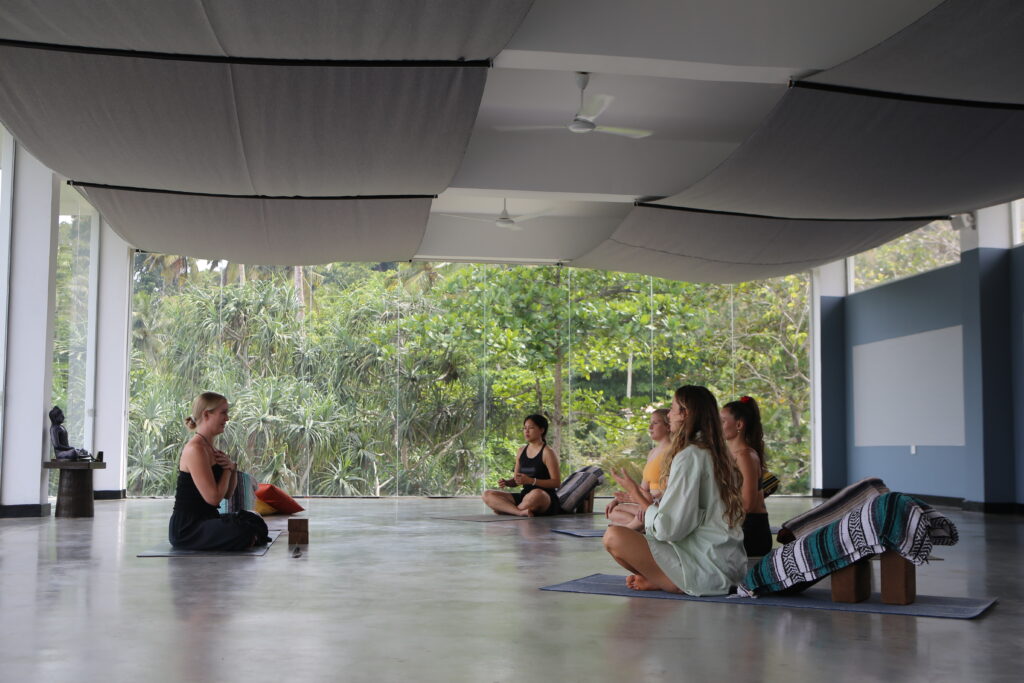
We found it comes down to two things. The first is the teacher leading the training, and the kind of relationship you build with them across 3 to 4 weeks of immersion. The second is the environment that holds the work, day after day, during the hours you’re not in class.
Both are easy to underestimate when you’re comparing brochures.
Why setting matters more than guests expect
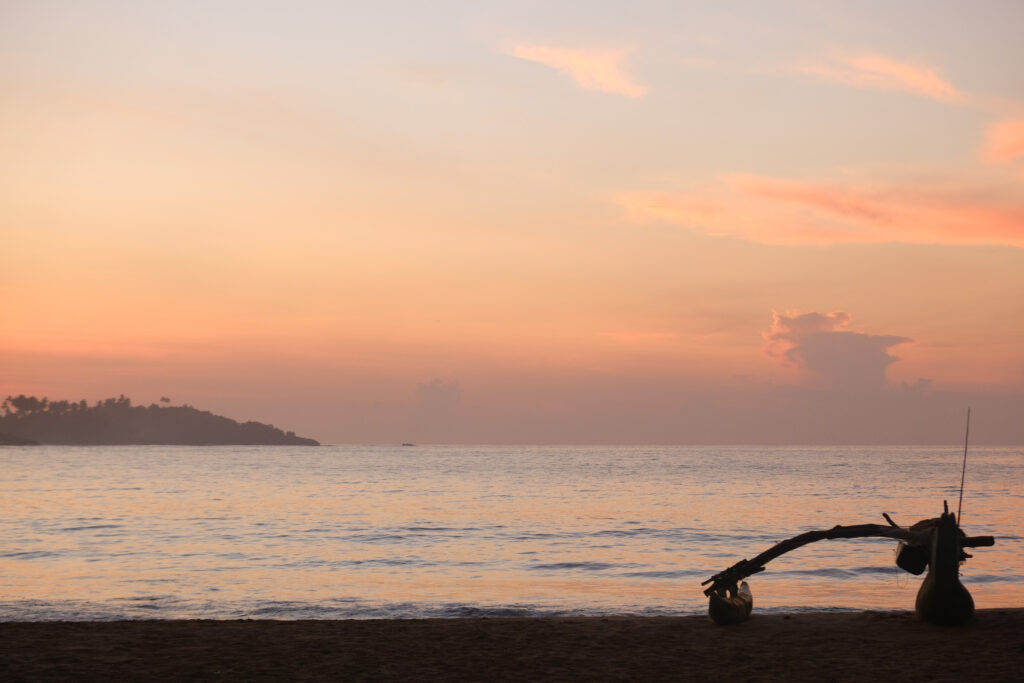
After hosting training groups year after year, we found returning teachers tell us the same thing: their groups bonded more deeply at Talalla than at their home studios, and they think it’s the setting that did it.
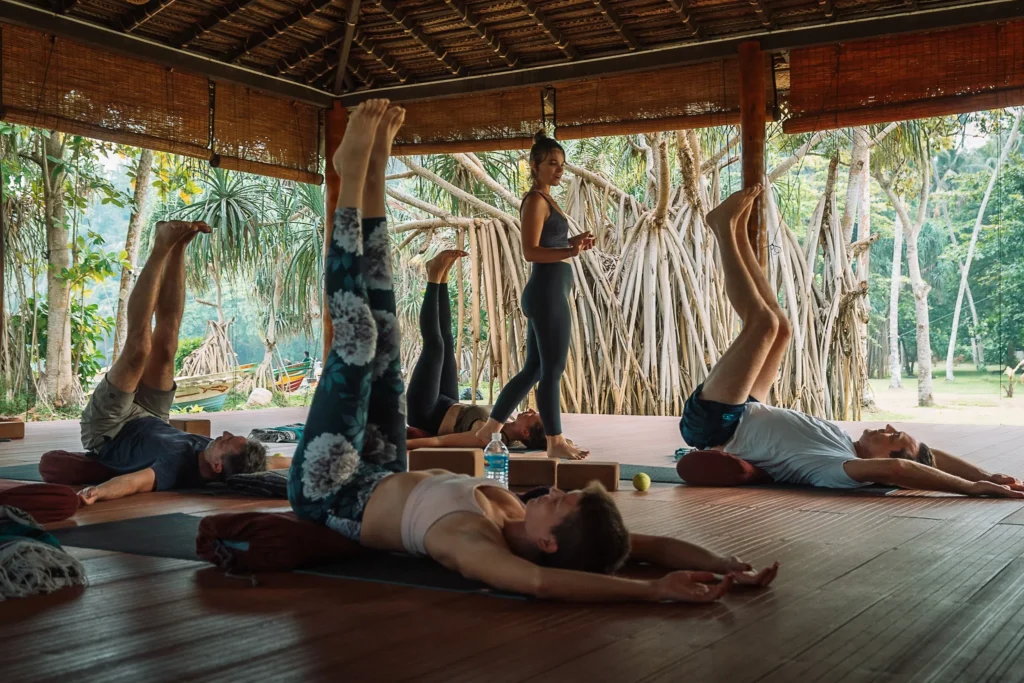
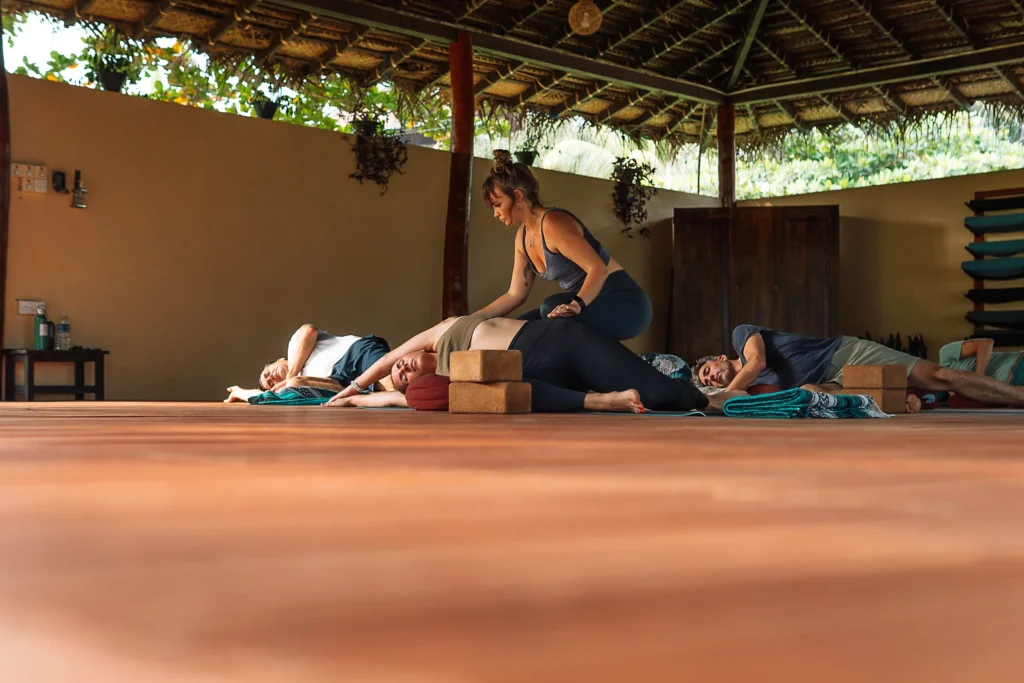
Learning anatomy and philosophy in an open-air shala means nature is part of your classroom. A monitor lizard might crawl past during a meditation. A bird flies through during a posture clinic. Peacocks call from the trees just past the property line.
That is part of the practice, not a distraction from it. The yoga programme runs in a four-storey shala that opens to the south coast on every side. The breeze does work that an air-conditioned studio cannot.
Students form lifelong tribes here
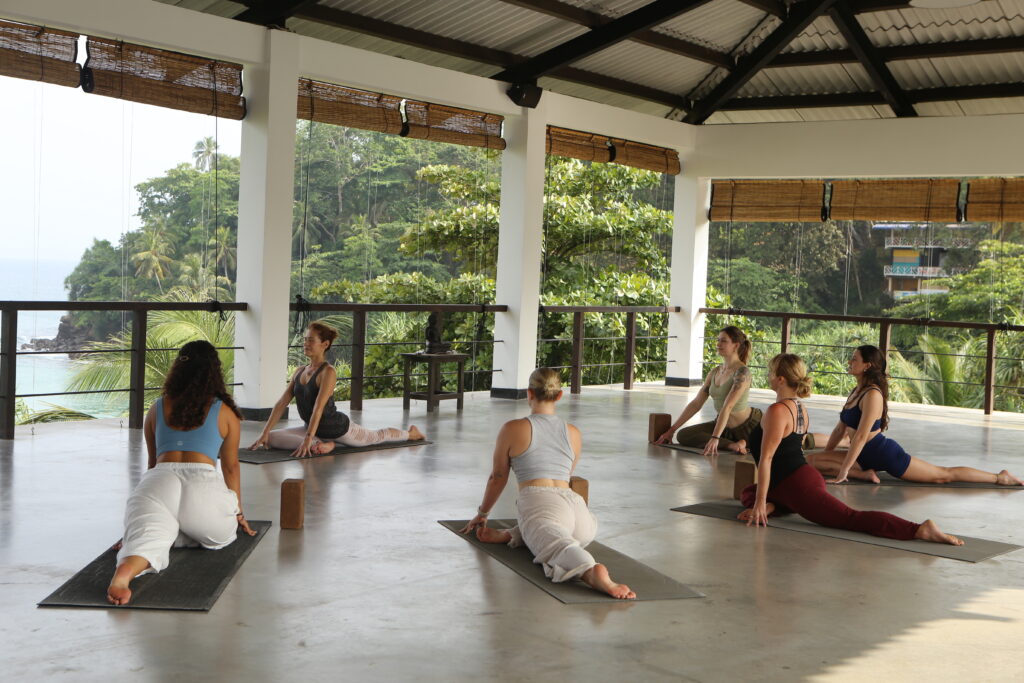
Every training group at Talalla lives, eats, and practises together for the full duration. The mornings are shared. The meals are shared. The shala is shared.
We found this is the part of YTT that brochures undersell most. Trainees describe their groups as lifelong tribes, which sounds dramatic until you’ve done a 28 day immersion next to the same eleven people.
The accommodation sits inside lush jungle, 2 minutes from a quiet beach. The whole property is built so that classmate connections happen without anyone forcing them.
What to ask before you book
If you’re comparing two or three trainings in Sri Lanka, these are the questions we found separate the good ones from the rest:
- Who is the lead teacher? Look up their teaching lineage, where they trained, and how many years they’ve been leading YTTs. A senior teacher running their tenth training will hold the room differently to someone running their first.
- How big is the group? Look for cohorts of 12 to 16. Smaller means more personal attention. Much larger and the practicum hours dilute.
- Where do you actually train? Some trainings rent a venue and bring everything in. Others, like ours, are hosted at properties that run yoga and wellness year-round, so the environment is shaped around the practice.
- What’s the daily schedule? A good training balances practice, study, rest, and integration. Avoid schedules that pack 8 hours of study into every day with no white space.
- What happens around the training? The shared meals, the evening conversations, the morning walk on the beach. These hours shape what trainees take home as much as the formal teaching does.
Why visiting teachers keep coming back to Talalla
Across 21 years, we found a pattern: teachers who host their first training at Talalla tend to come back the following year, and the year after that.
We don’t run trainings under our own brand. Instead, we host a global community of teachers who bring their own retreats and trainings to our shores.
That distinction matters. A visiting teacher trains their cohort their way, in a setting built to hold deep work. Talalla provides the shala, the food, the rooms, the rhythm. The teaching belongs to them.
If you’re a yoga teacher looking to lead your own training, this is a different conversation, and we welcome it.
Come and See the Shala
If you’re researching a training and want to walk through the space before you commit, we’d rather you came and saw it than relied on photos.
Drop-in yoga classes are included for guests booking before 31 May 2027, as part of our 21st Anniversary Offer.
Stay a few days, sit in on a class, talk to the teachers actually running trainings here.